

Search Engine Optimization (SEO) is the backbone of a successful blog. If you want to make money blogging, you need traffic, and to get traffic, you need a platform built for search engines.
As of 2024, WordPress powers over 39.5% of the internet. Why? Because it is built with SEO-friendliness at its core.
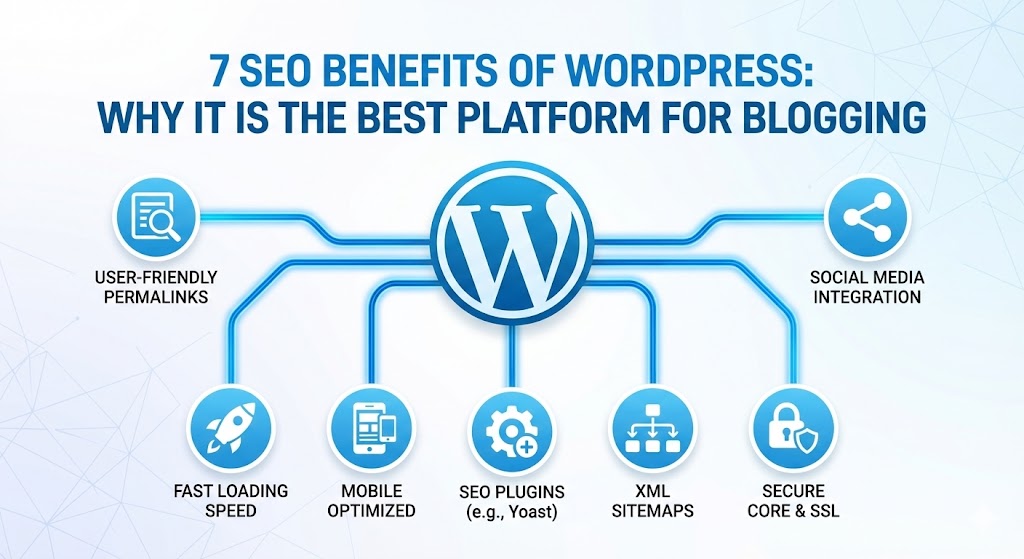
If you are wondering why you should choose this CMS for your next project, here are 7 SEO benefits of using WordPress.

1. Design Without Coding
One of the biggest hurdles for beginners is coding. WordPress eliminates this.
- User-Friendly: You don’t need to be a developer to create a site structure that Google loves.
- Themes: Thousands of responsive themes ensure your site is mobile-friendly—a critical ranking factor.
2. Powerful SEO Plugins
WordPress has a massive library of plugins that extend functionality.
- RankMath & Yoast: Tools like RankMath provide built-in suggestions to optimize your content, acting like an AI SEO assistant.
- Sitemaps: These plugins automatically generate XML Sitemaps, helping search engines find and index your pages instantly.
3. Customizable Permalinks
URLs matter. A messy URL like domain.com/?p=123 tells Google nothing. WordPress allows you to create custom permalinks (e.g., domain.com/seo-benefits-wordpress). Including your target keyword in the URL is a proven way to boost rankings.
4. Built-in RSS Feeds
RSS (Really Simple Syndication) helps streamline your content distribution.
- Indexing: WordPress has a built-in pinging system that alerts major indexes whenever you post new content, speeding up the indexing process.
- Subscribers: Plugins like Jetpack use these feeds to automatically notify subscribers of new posts, driving returning traffic.
5. Image & Speed Optimization
Site speed is a ranking factor, and large images are often the culprit for slow sites.
- Compression: Plugins like Smush or WebP converters compress images automatically upon upload without losing quality.
- Alt Tags: WordPress makes it incredibly easy to add Alt Text to images, helping visually impaired users and search engine bots understand your visuals.
6. Easy Google Analytics Integration
*(Note: Based on the article’s table of contents) Data is king. WordPress makes it effortless to integrate Google Analytics. Instead of messing with complex code in your header files, you can use plugins (like Site Kit by Google) to connect your analytics account in a few clicks, giving you direct insight into your traffic and audience behavior.
7. Excellent Technical Support
*(Note: Based on the article’s table of contents) Because WordPress is open-source and widely used, the support network is vast. From official support forums to thousands of YouTube tutorials, any SEO technical issue you face has likely already been solved by the community, ensuring your site never stays down or broken for long.

Conclusion
WordPress isn’t just a blogging platform; it is a sophisticated SEO tool. Its clean code, vast plugin library, and mobile-friendliness make it the superior choice for anyone looking to rank high on Google and grow their online business.
Also Read : What are the types of SEO? You Need to Know for 2025