

Are you still doing keyword research the same way you did five years ago? If you are strictly hunting for high-volume, low-competition terms, your strategy is likely falling behind.
The truth is, the way people use Google is changing at lightning speed. With the rapid integration of AI and conversational search, the old rules of SEO don’t always apply. As algorithms get smarter, your keyword strategy needs to evolve with them.
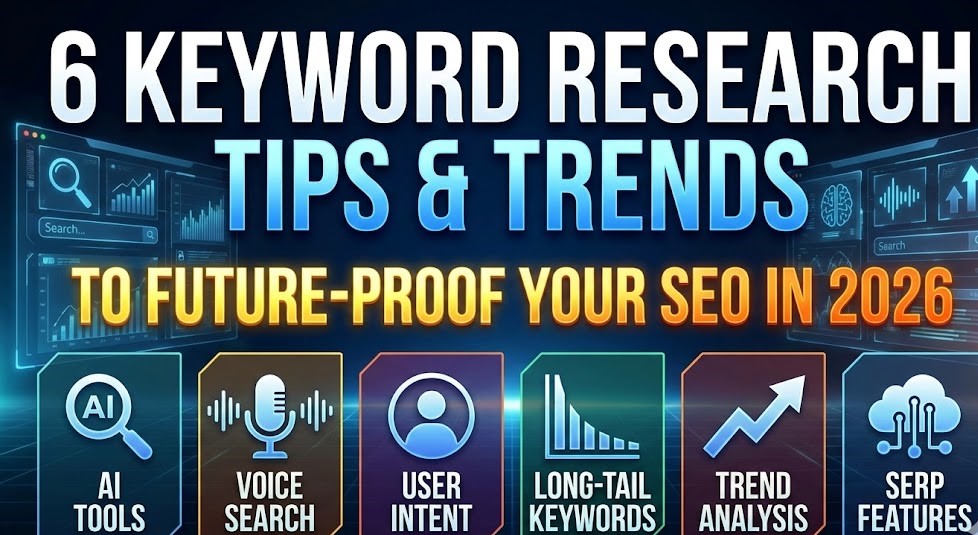
Here are the most critical keyword research trends and actionable tips to help you build a winning, future-proof SEO strategy in 2026 and beyond.

The Big Shift: 3 Trends Defining SEO in 2026
Before diving into specific tactics, you must understand the current search landscape. These three trends are dictating who ranks and who disappears:
- The Rise of AI Overviews: Google is increasingly answering queries directly at the top of the SERPs with AI-generated summaries. For simple questions, users no longer need to click on a website. To win, you must target complex, nuanced queries that AI cannot answer in a single sentence.
- Conversational Search is King: People now talk to search engines like they talk to friends. Instead of typing “wedding guest dress,” they ask, “What should I wear to an outdoor wedding in October?”
- User Intent > Search Volume: Chasing high search volume is a vanity metric. A keyword with 10,000 monthly searches is useless if the searchers aren’t looking to buy what you sell. The smart money is on understanding Search Intent and finding keywords that align with your business goals, regardless of volume.
6 Actionable Keyword Research Strategies
Knowing the trends is one thing; acting on them is another. Here are 6 practical strategies to dominate the search results.
1. Target “Zero-Search” Volume Keywords
Do not ignore a keyword just because your SEO tool says it has “0” search volume. These tools provide estimates, not absolute facts.
“Zero-search” keywords are often hyper-specific, long-tail phrases with massive conversion potential. For example, “best CRM for underwater basket weaving business” might show zero volume, but if you sell that software, the person searching for it is your perfect customer.
Pro Tip: Use tools like LowFruits to analyze the SERPs for low-competition keywords with high conversion rates. Look for low Keyword Difficulty scores and domains with low authority.
2. Mine “People Also Ask” for Ranking Gold
Google literally tells you what your audience wants to know via the “People Also Ask” (PAA) box.
When you expand a few questions in the PAA box, Google loads even more related queries. Gather these questions and answer them directly in your content, ideally using FAQ schema. This is one of the most effective ways to capture traffic for multiple long-tail variations.
3. Build Topic Clusters (The Authority Strategy)
Stop thinking about isolated keywords and start thinking about entire topics. Google rewards comprehensive coverage because it keeps users engaged.
Use a “Hub and Spoke” model to build Topic Clusters:
- The Hub (Pillar Page): A comprehensive guide targeting a broad keyword.
- The Spokes (Cluster Content): Supporting articles targeting specific long-tail keywords.
- The Link: Internally link all spokes back to the hub, and the hub to the spokes.
| Content Type | Purpose | Example |
| Pillar Page | The Hub | The Ultimate Guide to Healthy Eating |
| Cluster Content | The Spokes | Benefits of Healthy Eating; Healthy Recipes; Meal Planning; Diet Fads to Avoid |
4. Analyze the SERPs Before You Write
Data is great, but the SERP (Search Engine Results Page) is the ultimate truth. Before writing, search for your focus keyword and analyze what Google is currently rewarding:
- Search Intent Check: If you search “best headphones” and only see ecommerce product pages, a blog post will not rank.
- Format Match: Are the top results Listicles, How-To guides, or Videos? Match your content format to what Google prefers.
5. Optimize for Conversational Long-Tail Keywords
With the rise of voice search and AI chat, natural language is crucial. Instead of targeting robot-speak like “cheap flight NY to London,” target the full, natural sentence: “What is the cheapest time to fly from New York to London?” Use tools like AnswerThePublic or listen to the exact phrasing your customers use in support emails.
6. Look for “LSI” Keywords (Semantically Related Terms)
Google looks for context, not just keyword density. Latent Semantic Indexing (LSI) keywords are terms conceptually related to your main topic.
If you write about “Apple,” Google looks for words like “pie,” “orchard,” and “fruit” to know you mean food, or “iPhone,” “Mac,” and “Tim Cook” to know you mean tech. You can find these easily at the bottom of Google search results under “Related searches.”

Executing the Strategy with AIOSEO
Managing this workflow manually is tedious. All in One SEO (AIOSEO) for WordPress streamlines this entire process, ensuring you don’t miss ranking opportunities:
- Find Keywords Inside WordPress: AIOSEO integrates directly with Semrush. You can click “Get Additional Keyphrases” right inside your WordPress editor to find LSI keywords and search volumes without switching tabs.
- Perfect Optimization with TruSEO: As you write, TruSEO acts as your personal SEO coach, scoring your content against a Focus Keyword Checklist and Readability Checklist.
- Add FAQ Schema with Ease: The AIOSEO FAQ Block allows you to easily plug in those “People Also Ask” questions, automatically generating the schema markup Google loves.
Conclusion
The days of stuffing articles with high-volume, robotic keywords are officially over. In 2026, search engines are smart enough to understand context, nuance, and true user intent.
To future-proof your SEO strategy, you must stop treating keyword research as a numbers game and start treating it as a human conversation. By targeting zero-volume queries, building comprehensive topic clusters, and optimizing for the natural, conversational questions your audience is actually asking, you signal to Google that your site is a genuine authority. Pair this user-first approach with smart tools like AIOSEO, and you will build a resilient content strategy that drives targeted, high-converting traffic for years to come.
Also Read : What Is SEO? Search Engine Optimization Best Practices