

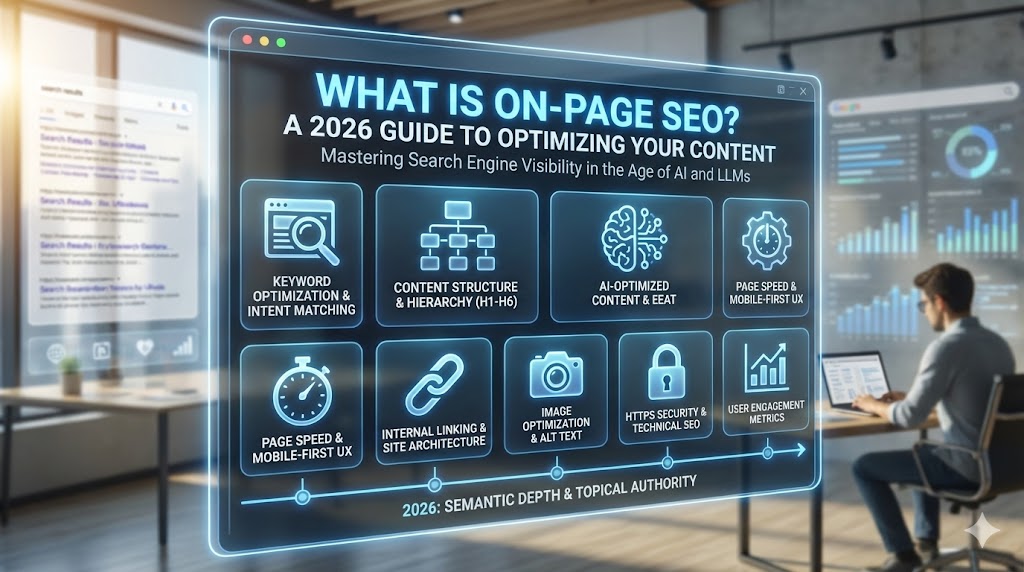
Search has changed a lot over the last few years. With the rise of AI and Large Language Models (LLMs), how we find information is evolving. However, one thing remains as relevant as ever: On-Page SEO.
If you want your content to be seen—whether by traditional search engines or AI tools like ChatGPT—you need to optimize it. This guide details exactly what On-Page SEO is, why it matters in 2026, and the specific techniques you can use to dominate the results.
What Is On-Page SEO?
On-page SEO is the practice of improving webpages to show prominently in search engine results and responses from AI tools. The goal is simple: improve visibility and attract relevant traffic.
Unlike technical SEO (which deals with the backend) or Off-Page SEO (which deals with reputation), On-Page SEO is about the content itself. Common best practices include:
- Writing content that matches search intent.
- Optimizing title tags and meta descriptions.
- Structuring pages with clear headings.
- Adding internal links between related pages.
- Improving page speed and the mobile experience.
The best part? You can do most of this yourself without hiring an expensive agency.
On-Page SEO vs. Off-Page SEO
It is crucial to understand the difference between the two main pillars of SEO.
On-Page SEO involves tasks performed internally on your website. You have full control over these factors.
- Examples: Adding keywords, optimizing image alt text, writing descriptive URL slugs, and improving page speed.
Off-Page SEO involves tasks performed externally outside of your site. These are often harder to control but vital for authority.
- Examples: Link building (backlinks), social media marketing, influencer marketing, and getting brand mentions.
Because you have full control over your own pages, On-Page SEO is the best place to start your strategy.
Why Is It Important?
On-page SEO helps search engines and AI systems understand your content and match it to relevant user queries.
Even factors that don’t directly impact rankings—like meta descriptions—are worth optimizing because they influence Click-Through Rates (CTR) and user experience. A better user experience signals to search engines that your content is valuable, which ultimately improves your visibility.+1
Also Read : What are the types of SEO? You Need to Know for 2025