

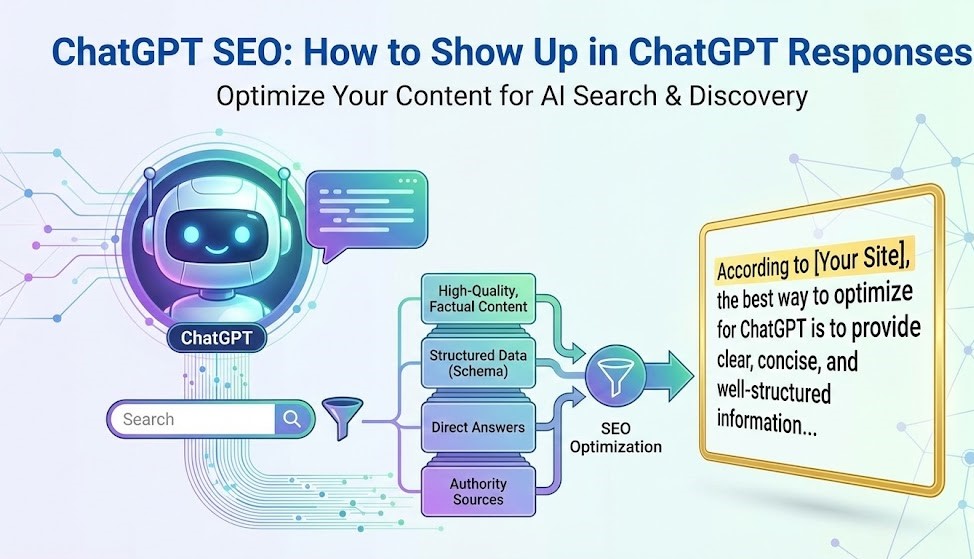
SEO for ChatGPT involves optimizing your website and wider online presence to increase and improve your brand’s appearance in ChatGPT answers to user queries.
Below, we’ll explain the benefits of optimizing for ChatGPT, the three steps you can take to optimize for the platform, and how to accurately measure your results.
Why Should You Do SEO for ChatGPT?
You should do SEO for ChatGPT because it can improve your visibility within ChatGPT’s responses (and those from other AI tools like and Google’s Gemini) and can also let you meet highly specific search intents.
Increased Visibility
Optimizing your brand’s online presence for ChatGPT increases the likelihood that the AI tool will cite or mention your brand in its responses. This translates to more awareness and possibly even more website traffic.
Our AI Visibility Index shows significant overlap between the brands mentioned by ChatGPT and Google’s AI Mode. There is also overlap between appearing in ChatGPT responses and ranking well in traditional Google organic search.
Meet More Specific Intents
User prompts in AI tools like tend to be far more specific than keywords users type into traditional search engines, which typically indicates users have clear goals and strong intent (i.e., they’re more likely to convert).
Here are some examples of those detailed prompts:
- “Can you recommend some popular brands for high-speed cat toys?”
- “What are the best apps or devices to remind me to feed my dog?”
- “How do I choose the best pet-proof feeder for my cats and dogs?”
Users are asking detailed questions with specific constraints. This level of detail suggests they’re actively looking for solutions, making them potentially more valuable customers.
How to Do SEO for ChatGPT in 3 Steps
Step 1: Ensure Your Site Is Indexed by Search Engines
ChatGPT uses traditional search engines like Bing and Google when it runs web searches in response to user prompts. Getting your website and content indexed in these search engines while following the is the first crucial step.
- Bing Webmaster Tools: Set up and submit your XML sitemap through the “Sitemaps” section to help Bing find and index your website’s pages. You can use the “Site Explorer” to discover pages with crawling issues (like 404 errors) or blocked robots.txt files. You can also use to instantly notify Bing when you publish or update content.
- Google Search Console (GSC): Use to monitor your site’s indexing status in Google. Submit a sitemap to GSC to improve your chances of getting indexed. Go to the “Pages” report to see a summary of the reasons Google hasn’t indexed certain pages. Once you fix an issue, click “Validate Fix” or “Request Indexing.”
Step 2: Write Content That’s Primed for AI Extraction
Structuring your content properly and using clear writing makes it more likely that ChatGPT will cite or mention your brand.
- Use a Clear Content Structure: Use descriptive headings, short paragraphs, and formatting like bullet points and numbered lists to organize information. This makes your content much easier to extract for AI tools.
- Use a Direct Writing Style: Answer your target audience’s questions immediately and directly right below your headings. Mirror the wording of the question in your answer. Also, include expert quotes, concrete case study results, and specific examples that ChatGPT can easily pull to use in its responses.
Step 3: Build Brand Mentions and Authority Signals
Building backlinks and brand mentions from relevant, authoritative sources heavily influences whether ChatGPT will reference your content.
- Continue Building Backlinks: Earn backlinks from websites ChatGPT frequently cites, because links from those sources carry more weight. You can identify these targets by asking ChatGPT questions in your niche and noting which sources it cites most frequently.
- Get Brand Mentions in Relevant Publications: Getting mentions of your brand in authoritative publications (even without a backlink) helps ChatGPT understand your brand’s relevance and expertise.

How to Measure Your ChatGPT SEO Performance
Track your ChatGPT performance by testing whether ChatGPT cites or mentions your brand in response to relevant prompts.
Enter queries your target audience would ask into ChatGPT and note whether your brand is cited, which other pages it references, and how prominently your content appears. Create a spreadsheet logging the query, date, citation status, and which competitors appeared in the responses.
Alternatively, you can use Semrush’s to automate and scale this tracking. The tool will show you:
- Which prompts your brand is appearing in ChatGPT for.
- How your visibility compares to your competitors.
- The sentiment toward your brand in ChatGPT.
- “Brand Strength Factors” and “Areas for Improvement.”
Boost Your Brand’s Visibility with SEO for ChatGPT
Optimizing your online presence for ChatGPT makes it more likely that your brand will be mentioned or cited in its responses. But ChatGPT isn’t the only AI system you should optimize for. Monitor your brand’s presence across platforms like , Gemini, and Google’s AI Overviews to ensure your online visibility continues to grow as search engines evolve.