

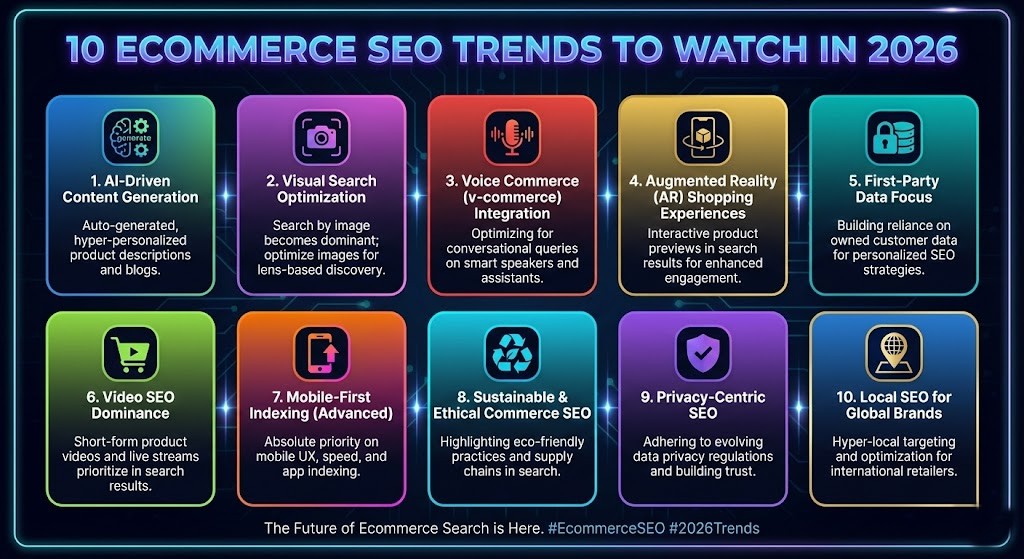
The rules of ecommerce have completely changed. Autonomous AI agents now heavily influence customer purchase decisions. Meanwhile, social platforms serve as complete, integrated commerce ecosystems.
Brands must adapt their strategies to survive and grow in 2026. Efficiency and AI readiness represent the new markers of success. Here are the top 10 ecommerce SEO trends you must know today.
1. Agentic AI Redefines Discovery
Agentic AI represents a massive shift in ecommerce discovery. These advanced systems research, compare, and even buy products for busy shoppers.
You must optimize your online store for these autonomous AI agents. Provide complete product attributes, including exact sizes and materials. Furthermore, implement proper Schema.org structured data markup for instant information extraction.
2. AI Optimization (AIO) Replaces Traditional SEO
Traditional SEO previously targeted Google’s standard search algorithm. Today, AI Optimization targets popular shopping assistants like ChatGPT and Perplexity.
Your website content must provide conversational answers to natural questions. AI assistants extract and consolidate information rather than simply ranking websites. Therefore, ensure your product descriptions remain clear, quotable, and contextually complete.
3. Social Commerce 2.0 Drives In-App Transactions
Social media platforms now function as integrated commerce channels. Users discover and complete purchases directly within the social app.
In-app checkout removes frustrating browser switching and repeated payment entry. This highly streamlined process eliminates traditional sales funnel friction. Consequently, platforms like TikTok Shop process billions in transactions annually.
4. Composable Commerce Becomes the Standard
Monolithic ecommerce platforms cannot match rapid technological innovation. Therefore, composable architecture has become the new infrastructure standard.
This framework allows businesses to replace specific technical components within weeks. This incredible flexibility helps brands respond to sudden algorithm changes instantly. It also reduces technical debt and dramatically improves site performance.
5. Digital Product Passports Ensure Transparency
The European Union now requires Digital Product Passports (DPPs) for many items. Blockchain technology verifies each manufacturing and shipping step securely.
Implementing DPPs enhances your E-E-A-T (Experience, Expertise, Authoritativeness, Trust) signals significantly. Search engines reward this verifiable sustainability with rich snippet opportunities. Early adopters will gain a massive competitive advantage worldwide.
6. Zero-Party Data Powers Personalization
Browsers severely limit third-party tracking cookies today. Therefore, you must collect “zero-party data” directly from your customers.
Offer valuable style quizzes or personalized product recommendations in exchange for information. This specific data helps you create highly targeted content. Ultimately, personalization boosts conversions and encourages profitable repeat visits.
7. Spatial Commerce (AR/VR) Reduces Returns
Augmented reality lets customers visualize products in their real physical spaces. This spatial commerce significantly reduces costly furniture and fashion returns.
You must create high-quality 3D models for your catalog products. This spatial investment pays off through much higher conversion rates. Furthermore, this rich visual content improves your overall search rankings.
8. Human-Made Content Differentiates Your Brand
AI-generated content completely floods the modern internet. Consequently, genuine human authenticity stands out prominently to buyers.
Showcase real makers crafting your unique products on video. Highlight their actual hands, specific skills, and slight artisan imperfections. This authentic human touch builds deep emotional connections and earns natural backlinks.
9. Dynamic Pricing Protects Profit Margins
Merchants frequently increase prices to cover rising global tariffs. Real-time algorithms adjust your pricing quickly to keep you competitive.
You must add proper schema markup for these dynamic prices. This ensures search engines display your exact prices correctly. Always maintain consistent pricing across all channels to protect customer trust.
10. Emotional Loyalty Replaces Transactional Programs
Modern loyalty programs focus on exclusive, emotional membership communities. Standard discount models simply do not drive long-term growth anymore.
Offer your loyal members early product access and expert VIP consultations. These deep emotional connections encourage massive repeat purchases. Active members also generate valuable user content and branded searches.
Also Read : 4 Essential Strategies for Navigating SEO in the AI Search Era