

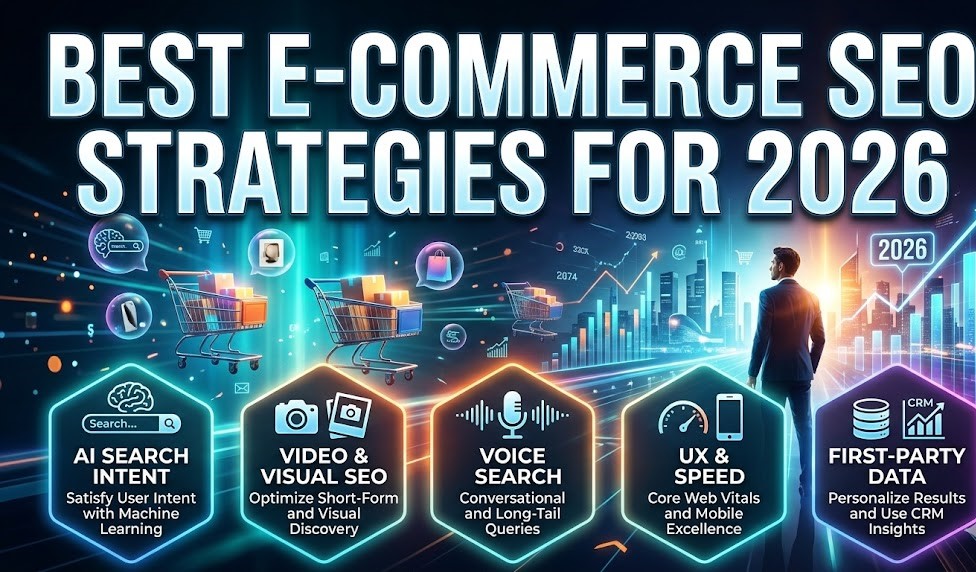
In 2026, the e-commerce landscape is no longer a battle of keywords—it is a battle of intent, experience, and intelligence. With nearly 49% of customers beginning and ending their shopping journeys within retailer apps or websites, traditional SEO is no longer enough.
Search engines now reward brands that provide seamless, personalized, and hyper-fast shopping experiences. To outrank competitors this year, your strategy must pivot toward Answer Engine Optimization (AEO), visual discovery, and voice-first content.

At a Glance: The 2026 E-commerce SEO Shift
| Trend | Impact on E-commerce | Strategy Requirement |
| Zero-Click Searches | Users get info directly on SERPs. | Optimize for Featured Snippets & AI Overviews. |
| Visual Search | Shopping via Google Lens/Pinterest. | High-quality, descriptive metadata for all images. |
| Voice Commerce | Millions of queries via Alexa/Siri. | Target natural language & long-tail questions. |
| User Experience | Core Web Vitals determine ranking. | Prioritize mobile speed & “touch-friendly” design. |
Top 7 E-commerce SEO Strategies for 2026
1. Optimize for Answer Engines (AEO)
Modern search engines like Gemini, ChatGPT, and Perplexity act as “answer engines.” To ensure your products appear in AI-generated summaries:
- Implement Schema Markup to help AI understand product attributes (price, availability, reviews).
- Create detailed FAQ sections that address specific buyer hesitations.
2. Conversational Voice Search
Voice search is about natural language. Instead of “running shoes,” users ask, “What are the best waterproof running shoes for trail hiking?”
- The Strategy: Use full-sentence headers and answer common “Who, What, Where” questions early in your content.
3. Visual Discovery & Image SEO
With 62% of millennials preferring visual search, your images must be more than just pretty pictures.
- The Strategy: Use descriptive filenames (e.g.,
men-blue-denim-jacket.jpginstead ofIMG001.jpg) and natural, keyword-rich Alt Text to drive traffic from Google Lens.
4. AI-Enhanced Content Production
Scale your product catalog without losing quality by using AI writing assistants like Jasper or Copy.ai.
- The Strategy: Use AI to generate unique product descriptions based on customer reviews, but always ensure a human-in-the-loop review to maintain brand voice and trust.
5. Securing “Position Zero” (Featured Snippets)
Featured snippets capture the highest organic click-through rates.
- The Strategy: Structure your data using Comparison Tables for pricing and specifications. Keep your direct answers between 40 and 60 words to increase snippet selection chances.
6. Video SEO for Product Research
YouTube is currently the second-largest search engine for product discovery.
- The Strategy: Create demonstration and “unboxing” videos. Embed these on your product pages to increase Dwell Time, a critical ranking signal for Google.
7. Prioritize Core Web Vitals (UX)
User experience is a direct ranking factor. If your site is slow or shifts during loading, your rankings will plummet.
- The Strategy: Utilize Google PageSpeed Insights to monitor LCP (Largest Contentful Paint) and CLS (Cumulative Layout Shift). Ensure your checkout process is optimized for mobile-first users.
Success Story: Restoring Visibility in 2026
We recently helped a mid-sized retailer restore declining traffic by moving away from “keyword stuffing” and toward User Intent Optimization.
6-Month Growth Results:
- Total Clicks: 329,000 (+17.5% increase)
- Impressions: 9.31 Million (+14% increase)
- Average Position: Improved from 10.0 to 8.5
Also Read : 4 Essential Strategies for Navigating SEO in the AI Search Era