

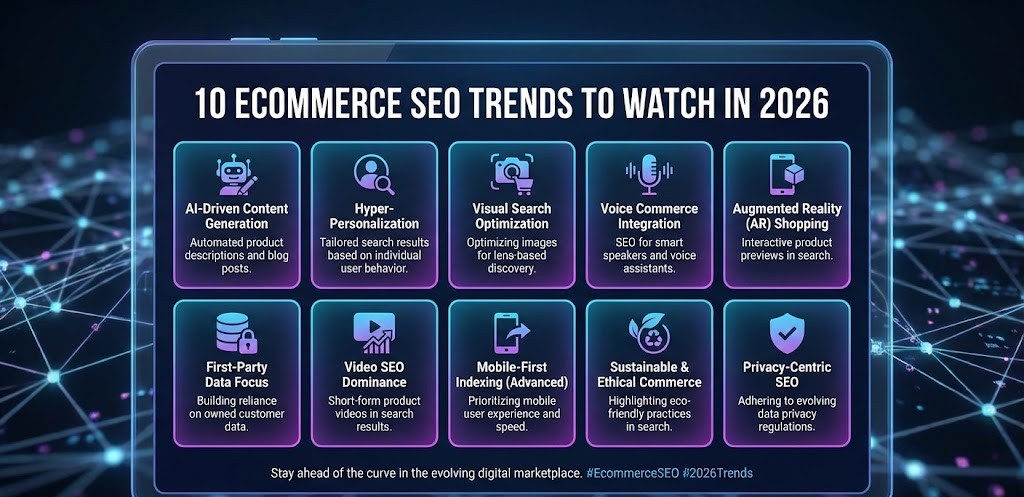
The world of ecommerce is shifting rapidly. While many brands still rely heavily on traditional SEO, a quieter revolution is fundamentally changing how consumers discover and purchase products online. Autonomous AI agents are increasingly influencing purchase decisions, social platforms have become robust commerce ecosystems, and efficiency is now the ultimate marker of success.
To stay competitive and achieve long-lasting growth in 2026, brands must adapt to these emerging trends. Here are the top 10 ecommerce SEO trends you need to know:

1. Agentic AI Redefines Ecommerce Discovery
Agentic AI represents a massive shift in how products are found and purchased. These advanced systems go beyond simple voice commands; they can actively research, compare, and even execute purchases on behalf of shoppers. To be discoverable by these autonomous agents, ecommerce sites must ensure their product attributes are comprehensive and utilize proper Schema.org structured data markup.
2. AI Optimization (AIO) Replaces Traditional SEO
Traditional SEO focused on ranking high on Google using specific keywords. Today, the focus is shifting to AI Optimization (AIO), which targets shopping assistants like ChatGPT and Perplexity. Content must now be conversational, answering natural language questions clearly and completely so AI assistants can easily extract and recommend your products.
3. Social Commerce 2.0 Drives In-App Transactions
Social media platforms are no longer just traffic drivers; they are fully integrated shopping destinations. Platforms like TikTok Shop and Instagram Checkout allow users to discover and purchase products without ever leaving the app, significantly reducing friction and boosting conversion rates.
4. Composable Commerce Becomes the Infrastructure Standard
The days of rigid, monolithic ecommerce platforms are fading. Composable architecture allows businesses to rapidly swap and integrate specialized tools and components. This agility enables faster implementation of SEO updates, better site performance, and the ability to quickly adapt to algorithm changes.
5. Digital Product Passports Ensure Transparency
Consumers and regulators are demanding more transparency regarding product origins and sustainability. Digital Product Passports (DPPs), often backed by blockchain technology, provide verifiable records of a product’s lifecycle. Implementing DPPs can enhance your E-E-A-T (Experience, Expertise, Authoritativeness, and Trustworthiness) signals and improve search visibility.
6. Zero-Party Data Powers Personalization
With the decline of third-party cookies, zero-party data—information customers willingly share in exchange for a personalized experience—is crucial. By offering value through quizzes or preference centers, brands can collect data to create highly targeted content that improves engagement and conversion rates.
7. Spatial Commerce (AR/VR) Reduces Returns
Augmented and Virtual Reality are transforming the online shopping experience by allowing customers to visualize products in their own spaces before buying. This increased confidence not only boosts conversion rates but also significantly reduces costly returns, particularly in the furniture and fashion sectors.
8. Human-Made Premium Content Differentiation
In an internet flooded with AI-generated content, genuine human authenticity is a powerful differentiator. Highlighting the craftsmanship and real people behind your products builds emotional connections and trust, which can naturally attract backlinks and improve your search rankings.
9. Dynamic Pricing Protects Profit Margins
To navigate fluctuating costs and market demands, dynamic pricing algorithms are essential. These systems adjust prices in real-time to remain competitive while protecting profit margins. Ensuring proper schema markup for dynamic prices is critical for accurate display in search results.
10. Emotional Loyalty Replaces Transactional Programs
Modern loyalty programs are shifting from basic discount models to building emotional connections and communities. Offering exclusive experiences, early access, and member-only events fosters deeper loyalty, leading to higher lifetime value, increased branded searches, and more user-generated content.
Also Read : 4 Essential Strategies for Navigating SEO in the AI Search Era