

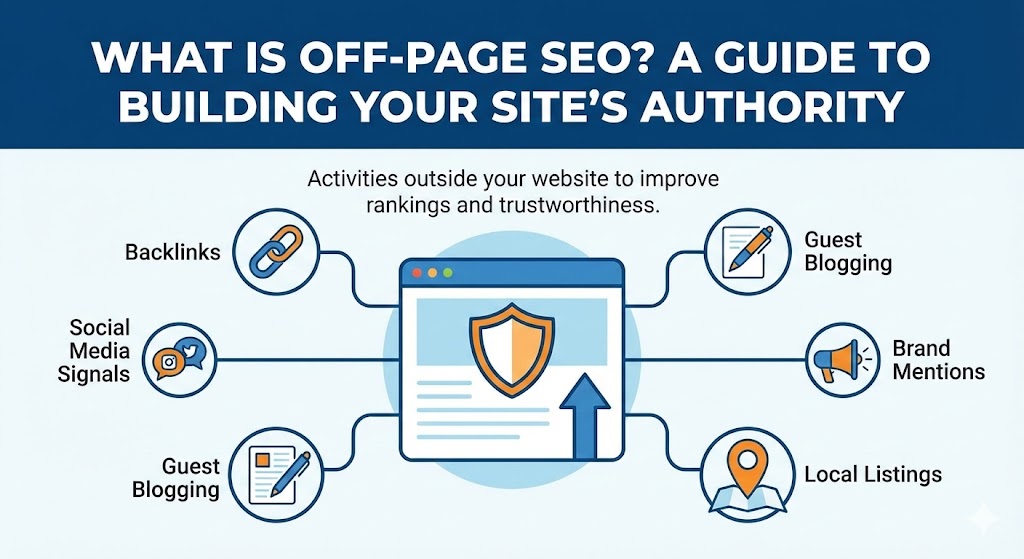
Off-page SEO (search engine optimization) refers to actions taken outside of your own website to impact your rankings within search engine results pages (SERPs).
While On-Page SEO focuses on optimizing your content and HTML, off-page SEO is all about building your site’s reputation and authority. It tells search engines like Google that your website is trustworthy, relevant, and popular.
According to Google’s E-E-A-T guidelines (Experience, Expertise, Authoritativeness, and Trustworthiness), off-page factors play a major role in how the algorithm evaluates your site.
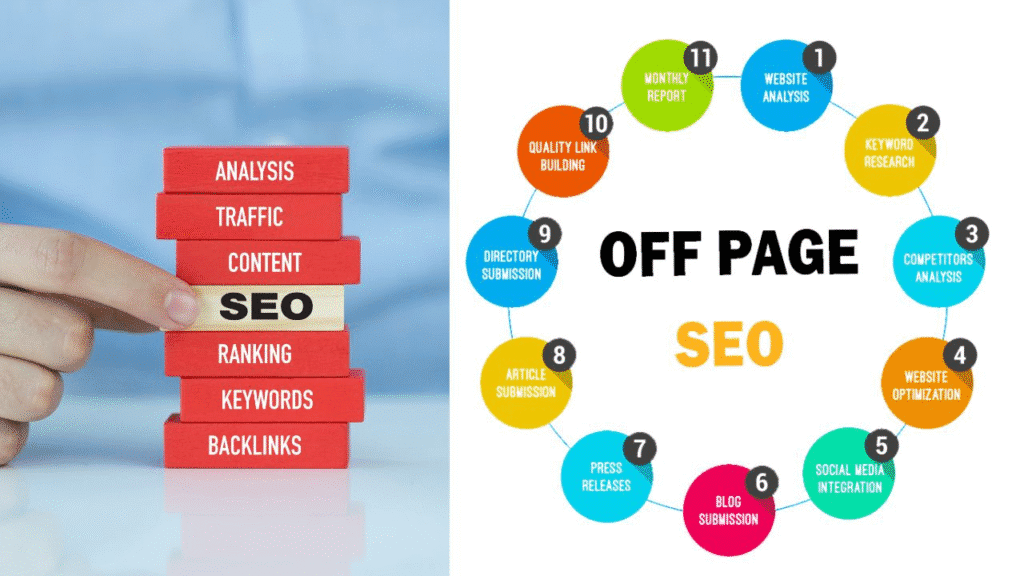
On-Page vs. Off-Page SEO: What’s the Difference?
Think of it this way:
- On-Page SEO: What you say about yourself (Content, Keywords, Site Speed).
- Off-Page SEO: What others say about you (Backlinks, Reviews, Mentions).
Both are essential, but off-page SEO is the “vote of confidence” from the rest of the web.
5 Off-Page SEO Techniques That Actually Work
1. Link Building
Link building is the backbone of off-page SEO. A backlink is simply a link from another website to yours. Google views these links as “votes.” The more votes you have from authoritative sites, the higher you rank.
Effective Tactics:
- Broken Link Building: Find broken links on other websites and suggest your content as a replacement.
- Unlinked Brand Mentions: Find sites that mention your brand but don’t link to you, and ask them to add a link.
- Journalist Requests: Use platforms like Connectively (formerly HARO) or monitor #JournoRequest on X (Twitter) to provide expert quotes to reporters in exchange for a link.
2. Content Marketing
Creating great content is only half the battle; distributing it is the other.
- Digital PR: Create newsworthy stories or data studies that journalists want to cover.
- Guest Posting: Write articles for other reputable sites in your niche. This exposes your brand to a new audience and often earns a backlink.
- Podcasts: Being a guest on industry podcasts builds authority and often results in a link from the show notes.
3. Social Media Marketing
While social media shares are not a direct ranking factor, they are a powerful signal.
- Amplify Content: Sharing content on social media increases visibility. More eyeballs lead to more potential backlinks.
- Brand Awareness: A strong social presence leads to more branded searches, which Google interprets as a sign of authority.
4. Local SEO (For Local Businesses)
For businesses with a physical location, off-page SEO overlaps heavily with Local SEO.
- Google Business Profile: An optimized and active profile is a critical off-page signal.
- NAP Citations: Ensure your Name, Address, and Phone number are consistent across all directories (Yelp, Yellow Pages, etc.). Inconsistent data confuses search engines.
5. Reviews and Reputation Management
Reviews are a direct ranking factor for local search and a huge trust signal for everyone else.
- Get Reviews: Actively ask satisfied customers to leave reviews on Google and other platforms.
- Respond: Replying to reviews shows engagement. Google explicitly states that responding to reviews improves your local SEO visibility.

Conclusion
Off-page SEO is about building a brand that people—and search engines—trust. It requires consistent effort in link building, networking, and reputation management. By focusing on these five areas, you can increase your site’s authority and climb the rankings.
Also Read : Beyond Keywords: A Modern Approach to On-Page SEO