

If you do any kind of digital marketing today, you have almost certainly been bombarded by a sudden alphabet soup of new optimization acronyms: GEO, AEO, LLMO, and AIO.
Here is the candid truth: they all mean essentially the same thing.
Instead of being entirely separate sciences, they are simply different lenses on one emerging discipline: AI SEO. This is the next evolution of search optimization. AI SEO builds on the foundation of traditional SEO by expanding what “visibility” actually means. It is no longer just about ranking a blue link on a search engine results page; it is about being retrieved, synthesized, cited, and recommended by artificial intelligence systems.+1
The fundamentals—relevance, authority, and clarity—still matter. But the way those signals are interpreted has changed drastically. Here is a breakdown of where these terms overlap, where they diverge, and what actually matters for marketers right now.
Unpacking the Alphabet Soup
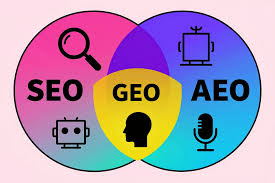
At their core, all of these acronyms aim for the exact same goal: helping your brand show up inside AI-generated responses in tools like ChatGPT, Perplexity, and Google’s AI Overviews.
| Acronym | What It Stands For | The Core Focus |
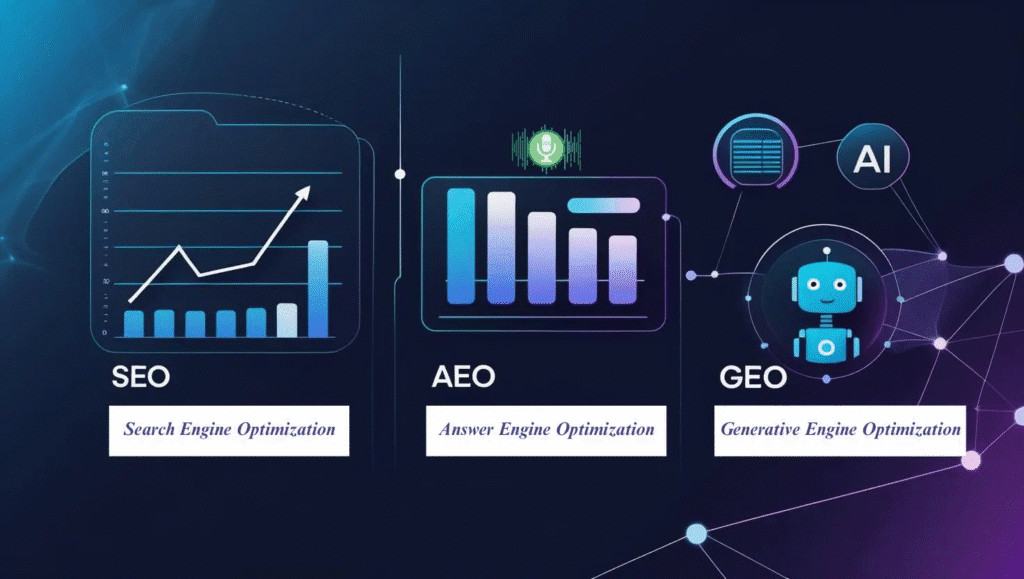
| GEO | Generative Engine Optimization | Optimizing content so generative AI models favorably interpret, cite, and recommend your brand. |
| AEO | Answer Engine Optimization | Structuring content to provide direct, concise answers for AI chatbots and voice assistants. |
| LLMO | Large Language Model Optimization | Training and optimizing for visibility, brand mentions, and citations within specific Large Language Models (LLMs). |
| AIO | Artificial Intelligence Optimization | A generalized catch-all term for adapting your digital presence for AI-driven discovery. |
Why All the Acronyms?
Let’s be honest: the industry is evolving in real-time, and professionals from SEO, content, PR, and data science are all trying to name the exact same shift.
Often, the creation of these new terms comes down to positioning. Agencies want to look ahead of the curve, executives are demanding their teams “figure out AI,” or consultants are packaging a new service to sell. There is nothing inherently wrong with that, but it does make things confusing for the rest of us.
SEO vs. Everything Else: What Has Actually Changed?
While the acronyms overlap, the refrain that “it’s all just SEO” isn’t helpful when you are trying to secure a budget from your boss or explain a shift in traffic to client stakeholders.
Traditional SEO focuses heavily on your owned properties—optimizing your website with keywords and backlinks to drive direct clicks. AI systems, however, do not just rank results; they synthesize, summarize, and cite. This means your visibility is no longer just about what is on your site. It is about how your brand shows up across the entire web and how those signals feed the machines.+2
This shift changes how marketers need to think organizationally:
- Strategy: SEO can no longer live in a silo. Your content, PR, and brand teams must collaborate around Entity Optimization. AI needs to clearly understand who you are and what you do across all platforms.
- Team Structure: You need professionals who understand how to optimize for retrieval and credibility, not just keyword density.
- Skills: Writers and SEOs must learn how AI systems source and credit information. This means prioritizing factual accuracy, clear data structures, and proper Schema Markup so machines can easily extract your answers.
- Resources: Budgets must stretch beyond tracking “organic traffic.” You now need to allocate resources for AI visibility tracking, brand mention monitoring, and unlinked PR citations.
The Bottom Line
Whether you prefer to call it GEO, AEO, or LLMO, the underlying goal of marketing has not changed. You still need to create incredibly valuable content and show up in the exact moments when your audience is ready to be influenced. The only difference is that today, your audience might be a machine reading on behalf of a human.
Also Read : What are the types of SEO? You Need to Know for 2025