

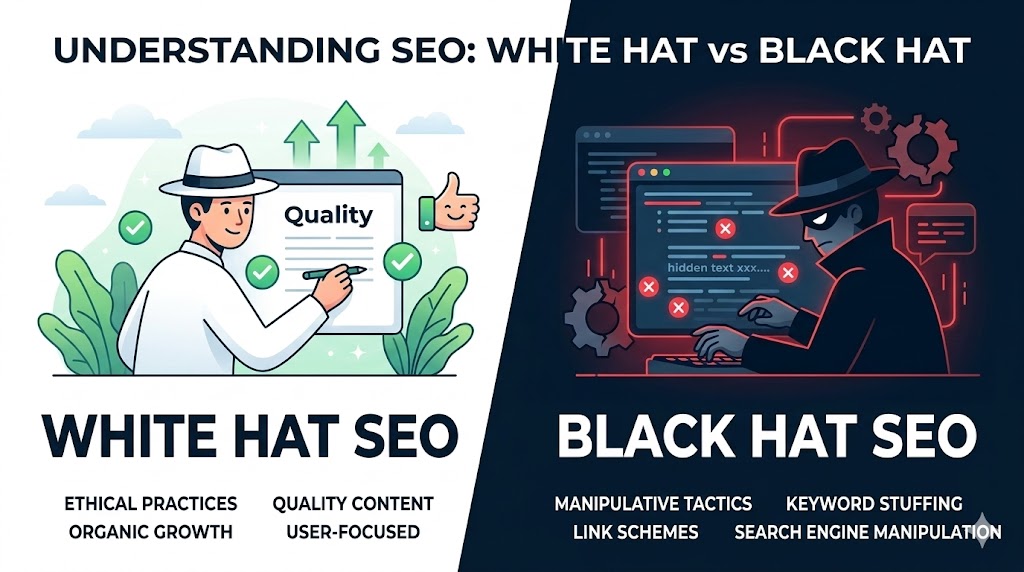
Have you ever wondered why certain websites consistently make it to the first page of Google, whereas others struggle to ever be seen? The secret often lies in the kind of Search Engine Optimization (SEO) they employ: White Hat SEO or Black Hat SEO.
These two approaches represent the ethical and unethical sides of digital marketing, and the path you choose will ultimately determine the long-term survival and visibility of your website.
Did you know? According to a 2024 SEMrush study, websites penalized for black hat SEO tactics lost over 70% of their organic traffic within six months, while those following white hat practices saw steady, compound growth in both rankings and conversions.
This guide will explain exactly what white hat and black hat SEO are, their fundamental differences, the risks involved, and why selecting the appropriate strategy is critical for long-term success.
Key Takeaways
- Ethical SEO: White Hat SEO strictly follows search engine guidelines, focusing on user experience, quality content, and earned links.
- Risky Tactics: Black Hat SEO uses deceptive practices like keyword stuffing and hidden links, which almost always lead to severe ranking penalties.
- Know the Difference: Understanding white hat vs. black hat SEO protects your rankings, organic traffic, and brand reputation.
- The Grey Area: Grey Hat SEO includes risky tactics that are not explicitly banned yet, but are highly vulnerable to future algorithm changes.
- Safe Transition: To protect your site, you should audit your backlinks, fix thin content, and run technical SEO audits regularly.
What Is White Hat SEO?
White Hat SEO is the ethical method of optimization that puts users first. It focuses on delivering highly valuable content, maintaining fast and user-friendly websites, and earning genuine backlinks.
Core White Hat Strategies:
- Creating high-quality, intent-driven content marketing.
- Conducting proper on-page optimization with accurate headings and meta tags.
- Making technical improvements for faster page speed and seamless mobile access.
- Building natural links through genuine outreach and digital PR partnerships.
While the results of white hat SEO take time to materialize, they are stable, secure, and sustainable. By aligning completely with Google’s Search Essentials, white hat SEO builds domain trust and ensures steady growth without the constant fear of penalties.
What Is Black Hat SEO?
Black Hat SEO refers to a group of malpractices aimed at actively deceiving search engines instead of complying with their spam policies.
Common Black Hat Strategies:
- Keyword stuffing and cloaking (showing different content to users vs. search engines).
- Using concealed text or hidden links.
- Purchasing and selling spammy backlinks on a massive scale.
- Publishing duplicate, scraped, or completely unedited auto-generated content.
While these aggressive tactics might provide a rapid, temporary burst of traffic or rankings, they are extremely dangerous. Search engines actively hunt for these practices, and getting caught leads to heavy algorithmic fines or total delisting from the search results. Recovering a penalized domain is often incredibly expensive and challenging.
Difference Between White Hat and Black Hat SEO

To help you visualize the stark contrast between long-term ethical development and short-term dangerous manipulation, here is a breakdown of the critical differences:
| Aspect | White Hat SEO | Black Hat SEO |
| Primary Goal | Grow step-by-step and establish brand trust. | Get quick results by actively cheating the system. |
| User Focus | Made for people: useful content, fast site, easy to browse. | Made for search engines: full of code tricks and spam. |
| Techniques | Natural keyword use, great content, earned links. | Keyword stuffing, hidden text/links, buying fake links. |
| Risk Level | 100% safe to use; protected against algorithm updates. | Extremely risky; can get your site permanently banned. |
| Return on Investment | Takes time to build, but the results last long-term. | Works fast initially, but crashes hard and is difficult to fix. |
Grey Hat SEO: How to Transition Safely
Grey hat SEO falls directly in between white hat and black hat SEO. These manipulation methods are not explicitly prohibited by search engine guidelines yet, but they remain risky. They are capable of bringing short-term wins, but they frequently result in penalties whenever Google rolls out a major core algorithm update.
Common Grey Hat SEO Techniques:
- Private Blog Networks (PBNs): Using a network of owned sites to quickly build backlinks to a main site, which appears highly manipulative to search crawlers.
- Aggressive Anchor Text Link-Building: Over-optimizing anchor text to force rankings without actually earning those links organically.
- Lightly Edited Auto-Generated Content: Leveraging AI writing tools or heavy automation without proper human oversight, editing, or fact-checking.
With the rapid rise of artificial intelligence, an AI SEO Agency can safely implement automation while still strictly following white hat SEO guidelines. With the help of the latest technologies and professional assistance, companies can remain efficient and scalable without exposing themselves to catastrophic algorithm fines.
Partner with SEO Discovery
If you want to future-proof your website, you must avoid risky black hat and grey hat tactics. At SEO Discovery, we specialize in pure white hat SEO strategies that drive lasting growth, higher organic rankings, and long-term ROI.
Also Read : 4 Essential Strategies for Navigating SEO in the AI Search Era